Rossella Santapaola
Supervisors
Daniela Lotta
Marco Lo Curzio
Rossella Santapaola
Supervisors
Daniela Lotta
Marco Lo Curzio
High Legibility: New Paradigms in Inclusive Museum Communication
Nuovi paradigmi nella comunicazione museale inclusiva
Research question
Is it possible to ensure high text legibility while preserving an institution’s visual identity?
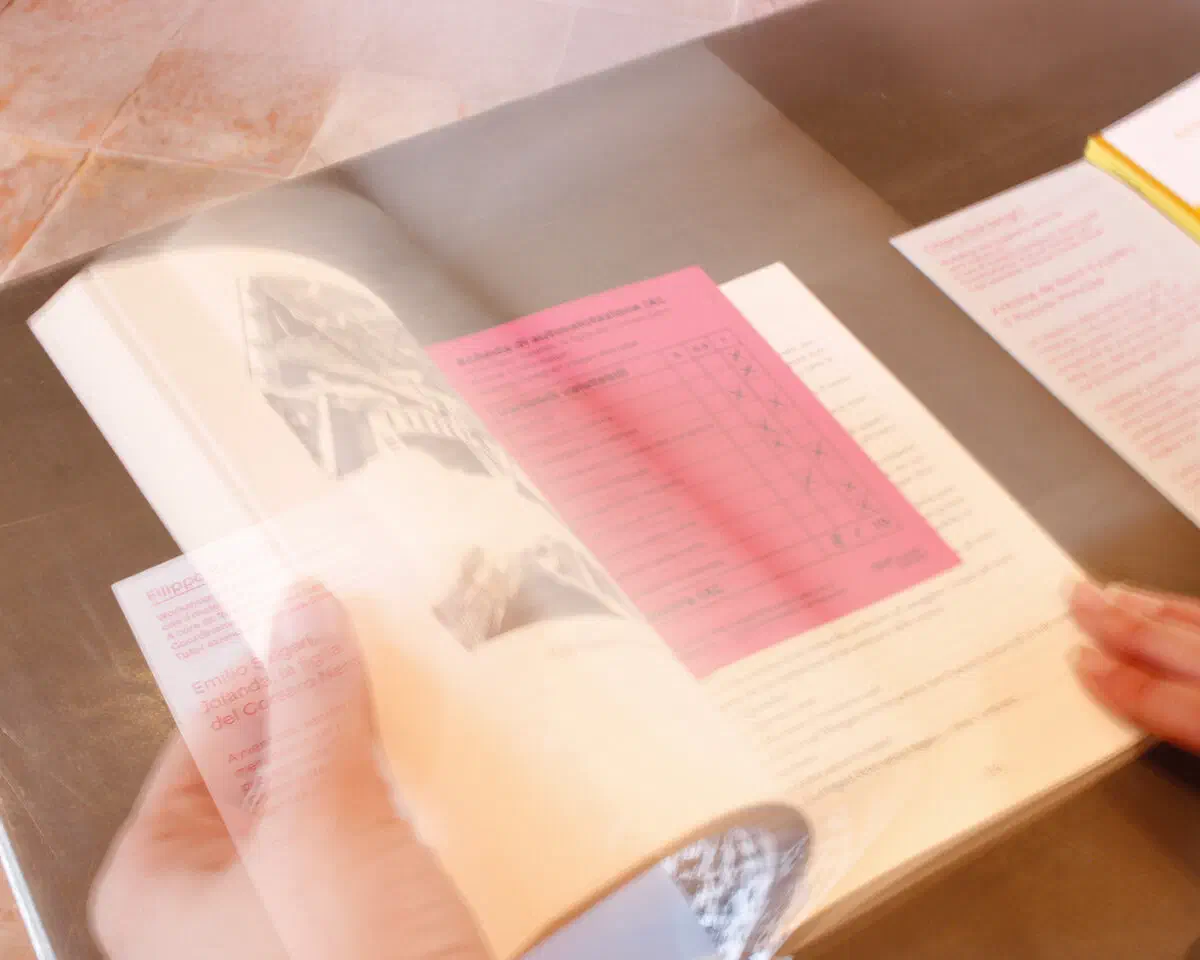
This research is situated in the field of public-service visual communication design, with a focus on accessibility in museum contexts. It investigates how text legibility and the visual identity of cultural institutions can be reconciled through applied research and experimental development. In this context, the Extended Legibility Index (ELI) is tested and refined as an evaluation framework built on ten parameters related to micro- and macro-typography, book construction, and printing. Originally developed for printed books aimed at adult readers (18+), the ELI is conceived as a scalable tool adaptable to other museum communication artefacts, together with digital companion materials. The ELI guides the graphic designer’s decisions, offers commissioners a reference point for checking consistency with visual identity, and broadens access to textual content.
Methodology
The approach adopted is research through design, with a predominance of qualitative methods (Cardano & Gariglio, 2022), supported by quantitative measurements when necessary. The research combines a literature review on dyslexia, typographic legibility and accessibility; an analysis of Italian and European regulations and good practices (PEBA, LUQ, EAA, Marrakesh Treaty); design and evaluation activities in real-world contexts; and the systematic use of evidence to guide and verify design decisions.
Case studies
In the academic year 2024–2025, the ELI was tested with a focus group of students from the Master’s in Communication Design at ISIA Faenza (aged 22–30), who applied it during a workshop as a design guide and self-assessment tool for prototypes of printed books aimed at adult readers. Further replications are planned with students from ISIA Faenza and ABACATANIA. In 2026, the framework was applied to the design of the art catalogue Double Jeu by Léa Renard, in collaboration with MIC (International Museum of Ceramics in Faenza), to assess its effectiveness in a museum context. Further tests on editorial prototypes are also planned with the museum’s target audience.
Data analysis and interpretation
According to the questionnaires administered to students at the end of the first workshop, the ELI helped them justify their design choices by shifting the focus from purely aesthetic criteria to criteria related to legibility and design coherence. The final prototypes achieved ELI values between 8 and 8.5 out of 10, with good consistency between the design and the printed product. Participants also reported that the index helped them balance legibility with the book’s graphic identity. These data will be compared with those from subsequent workshops. In the museum case, using the ELI for the Double Jeu catalogue made the dialogue between designer and commissioner smoother; it helped articulate typographic and editorial choices and safeguarded both the museum’s visual identity and legibility requirements.
Bibliography
Bibliography
Bruni, M. E., & Bilotta, S. (2025). Il museo accessibile. Pratiche partecipative e impatto sociale in un’organizzazione culturale. Egea.
Cardano, M., & Gariglio, L. (2022). Metodi qualitativi. Pratiche di ricerca in presenza, a distanza e ibride. Carocci Editore.
Ciaccheri, M. C., & Fornasari, F. (2022). Il museo per tutti. Buone pratiche di accessibilità. Edizioni La Meridiana.
Perondi, L. (2024). L’alta leggibilità (non) esiste? Cosa significa progettare un testo graficamente inclusivo. Nomos Edizioni.
Unger, G. (2020). Teoria del type design. Ronzani Editore.