Rachele Romano
Supervisor
Gianni Latino
Rachele Romano
Supervisor
Gianni Latino
The Museum System as a Public Service: The Relationship Between Client and Graphic Designer in Syracuse and Its Province
Il rapporto tra committenza e progettista grafico a Siracusa e provincia
Research question
How can graphic design, in collaboration with the commissioning body, enhance museums’ ability to make content understandable and accessible, thereby contributing to their public, socially and morally responsible role and to local development? The operational aim of this research is to identify methods of collaboration and design tools for translating complex content into clear and effective visual systems, with particular reference to the Sicilian context.
Our worldview is shaped by fragments organised into shared systems of meaning which, in cultural spaces, take the form of communicative devices (signage, visual identity, displays) capable of guiding the public’s understanding. Culture can therefore be understood as a set of practices involving the selection, organisation and transmission of knowledge. What appears natural is the result of constructed cultural processes.
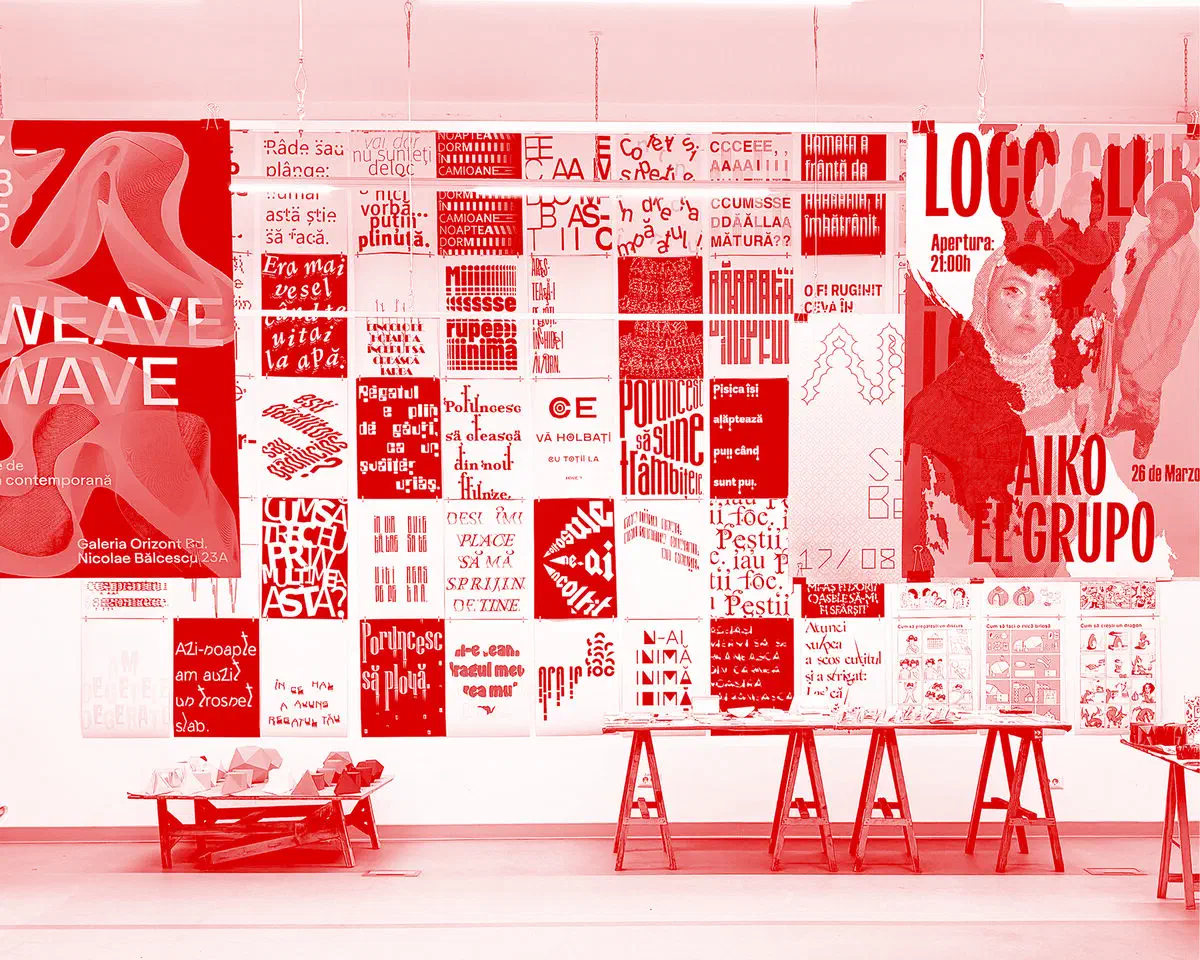
This research is innovative because it addresses the central issue of the role of the contemporary graphic designer, who is often reduced to visually interpreting the ideas of others — ideas dictated by propaganda, economic interests and tourism marketing — with the risk of stifling the critical thinking that underpins cultural development. Her work is creative, stemming from her direct involvement in exhibitions such as ‘Trust Utopia’, ‘Urgenze e Resistenza’ and ‘Responsabilità e Grafica’, in which she explores the integration of design culture, museology and conceptual analysis within the urban environment. It is also exploratory, as she tests the effectiveness and transferability of these models across different contexts.
Methodology for achieving the objectives
The methodology is mixed and systematic: it comprises a conceptual analysis of key terms, in which etymology is used as an interpretative tool to clarify the evolution of meanings; a qualitative ethnographic and auto-ethnographic analysis of case studies, conducted through the observation of communicative devices and the relationships between actors, as well as in-depth interviews; finally, the definition of operational ethical criteria (accessibility, clarity, accountability), which are applied in the project design.
Case studies
The reference to the work of Albe and Lica Steiner and other pioneers of public service graphic design in the post-war years allows us to conceive of the graphic designer as a cultural mediator focused on the public interest. This framework is applied to the cases of the Regional Gallery of Palazzo Bellomo, where a graphic design project that was never implemented already exists; the Archaeological Park of Catania and the Aci Valley, where there is no graphic design in place; and certain museum institutions in Bucharest, whose premises have been completely overhauled following a major system overhaul.
Data analysis and interpretation of results
The comparative analysis examines communication systems, the role of the client, and the training of the stakeholders involved. The expected outcome is the definition of guidelines and operational tools that are replicable, applicable and verifiable in similar museum contexts.
Bibliography
Bibliography
Albanese, F. (2025). Mentre il mondo dorme. Mondadori.
Grimaldi, P. (2020). Il design della comunicazione. Artem.
Latino, G. (2025). Grafica sociale, Una storia importante. Grafica magazine, 2(4), 10–13.
Montanari, T. (2025). Libera università. Einaudi.
Pierini, J. (2021). Steiner e Dolcini: Tra grafica utile e disordine attivo. Corraini