Olga Gurgone
Supervisor
Marco Lo Curzio
Olga Gurgone
Supervisor
Marco Lo Curzio
Social-Emotional Mapping in Graphic Design for Territory: Applications for Natural Heritage and Environmental Culture
Applicazioni per il patrimonio naturale e di cultura ambientale
Research question
Can social-emotional mapping serve as a visual tool for inclusive and participatory local communication strategies? This research question stems from the following premise: at present, communication strategies for natural heritage are predominantly oriented towards tourism and produce stereotypical narratives that, in effect, exclude local communities from the narrative process. To protect and safeguard the local area, however, it is necessary to place local communities at the heart of the storytelling.
Methodology for achieving the objectives
The objective is to develop a replicable design framework for the enhancement of natural heritage. The research adopts a ‘research through design’ approach and a mixed methodology to integrate quantitative data collected in the first phase (via questionnaires and interviews); and, in the second phase, qualitative data (from workshops, urban walks and sentiment mapping from social media through lexical analysis). The third and final phase involves the visual coding of the data onto a map with various layers of information, equipped with an interactive wayfinding system.
Case studies
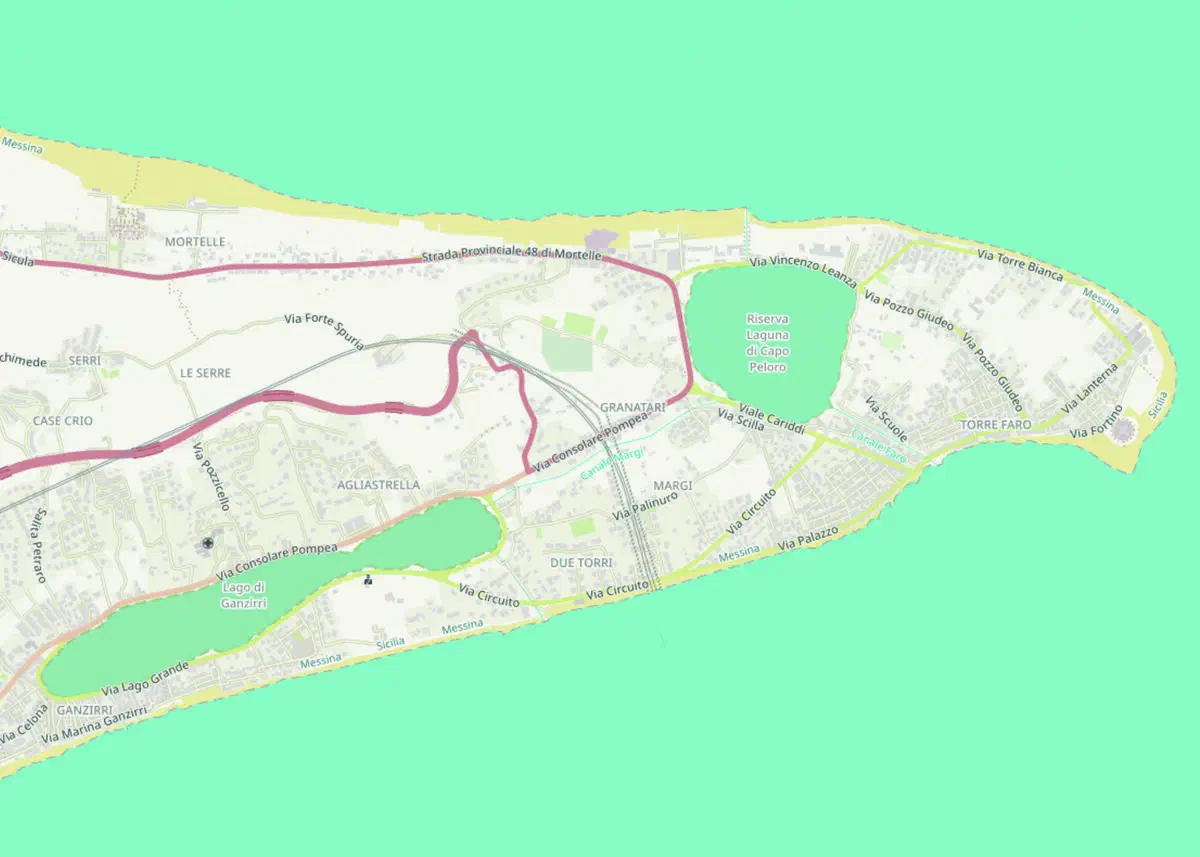
The research will focus on the Capo Peloro Nature Reserve in Messina, an area situated in the Strait; it encompasses two lakes, Pantano Grande and Pantano Piccolo, and the two coastal villages of Torre Faro and Ganzirri. The Reserve is of great importance due to its biodiversity and the numerous ethno-cultural activities associated with the area. To develop the design framework, results and methodologies from a selection of particularly relevant case studies will be analysed. The recent study by Tusznio et al. (2026) highlights how emotional mapping can foster a sense of place and greater awareness in our relationship with nature, whilst the case studies of the Nordhordland UNESCO Biosphere Reserve (Cusens et al., 2022) and the Natura 2000 site in Romania (Morariu et al., 2023) integrate social mapping to document the tangible (biodiversity, natural resources) and intangible (well-being, identity) values of a natural area.
Relevant to the application of social media in collecting data on tangible and intangible heritage are the studies conducted by Serrano et al. (2024) on Valencia and Alicante, and Tenzer (2024) on northern England, between the Peak District National Park and Sheffield.
Data analysis and interpretation of results
Data will be collected where objective and monitored where subjective, in order to identify the values attributed to the area, as well as the community’s current level of engagement, interest and knowledge of the place. The expected outcomes are: at a theoretical level, a replicable design framework; at a practical level, a demonstration that social-emotional mapping, when translated into visual representations, can enhance the natural heritage and build a shared sense of place.
Bibliography
Bibliography
Cusens Jarrod; Barraclough Alicia M.D.; Måren, Inger Elizabeth, Participatory mapping reveals biocultural and nature values in the shared landscape of a Nordic UNESCO Biosphere Reserve, «People and Nature», 4 (2022), p. 365-381, DOI: 10.1002/pan3.10287.
Morariu, Simona-Diana [et al.], Mapping biodiversity and cultural values complemented with understanding of social dynamics provides effective means for addressing opportunities for nature conservation in a cultural landscape, «Frontiers in Environmental Science», 11 (2023), DOI: 10.3389/fenvs.2023.1112896.
Serrano Estrada Leticia [et al.], Mapping Heritage Engagement in Historic Centres Through Social Media Insights and Accessibility Analysis, «Land», 13 (2024), n. 12, DOI: 10.3390/land13121972.
Tenzer Martina, Social Landscape Characterisation: a peoplecentred, place-based approach to inclusive and transparent heritage and landscape management, «International Journal of Heritage Studies», 30 (2024), n. 3, p. 269-284, DOI: 10.1080/13527258.2023.2289424.
Tusznio Joanna [et al.], Can maps help in reflecting on nature? The added value of participatory mapping in focus group interviews, «Innovation: The European Journal of Social Science Research» (2026), p. 1-21, DOI: 10.1080/13511610.2026.2645632.