Nicola Guastamacchia
Supervisors
Francesco Lucifora
Gabriella Lo Ricco
Nicola Guastamacchia
Supervisors
Francesco Lucifora
Gabriella Lo Ricco
Pomeriggio: Contemporary Art and Mediterranean Studies
Arte contemporanea e studi mediterranei
Research Question
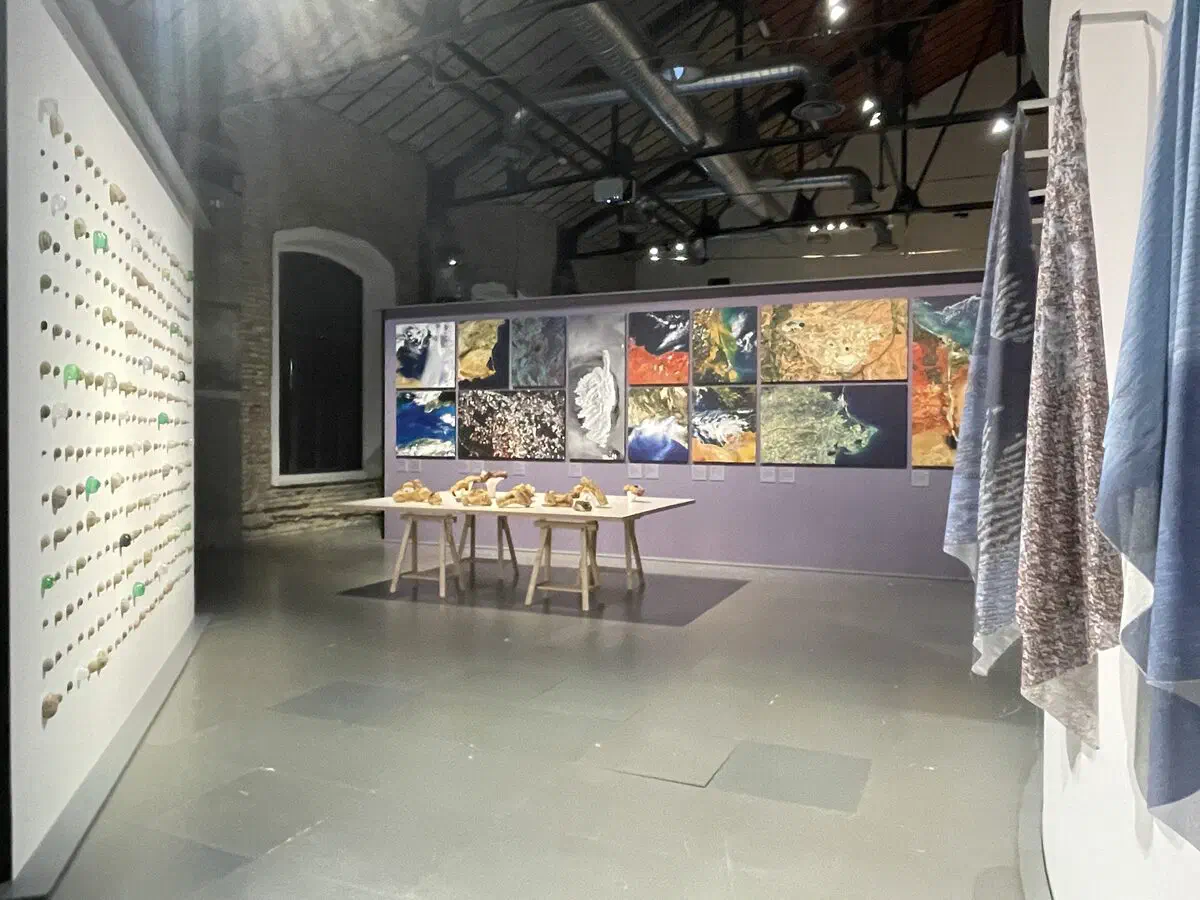
What genealogy has led to the Mediterranean’s current centrality in contemporary art narratives? This research investigates the phenomenon by building a bridge between Mediterranean Studies and contemporary art – a domain of symbolic and political expression the former has rarely engaged with – demonstrating how artistic practices contribute to the evolution of the basin’s imaginaries (Chambers, 2025). The research asks how Italy promotes such practices within the context of a renewed geopolitical projection, and how this ‘presence’ operates as a soft power device for rewriting national identity in Mediterranean terms (Fogu, 2025). The objective is to found an annual journal dedicated to the dialogue between art and Mediterranean studies; this forms the practical component of the project.
Methodology
The research adopts a qualitative methodology based on comparative case studies and grounded theory, where the interpretive framework is constructed inductively from fieldwork. The critical apparatus is grounded in the concept of ‘pomeriggio’ [afternoon]: a suspended temporality, neither centre nor periphery, which is developed in dialectic with Franco Cassano’s ‘Southern thought’ (2005). This conceptual apparatus guides the research strategy: bibliographic expansion and the drafting of a transdisciplinary glossary; cataloguing of exhibition events from the 2000s onwards; and interviews with curators, artists, and cultural practitioners. The research is also structured around two periods of study abroad: the first at Universiteti i Arteve (Tirana), representing a Balkan perspective of hypo-reflection; the second at Les Beaux-Arts de Marseille, where the Saison Méditerranée 2026 offers the vantage point of a former colonial power in a phase of hyper-reflection. These two poles are chosen to render, by contrast, the structural asymmetry of the basin.
Case Studies
The literature review reconstructs the region’s evolution from pre-Columbian centre to exoticized periphery, with a focus on the post-1989 crisis and Atlantic decline; it analyses key exhibition moments from the 1989 Bienal de La Habana to documenta 11 and 14, and the coastal editions of Manifesta. The impact on the Italian system is analysed through the Nouveau Grand Tour, Cantica 21, and Mediterranea at MAXXI (2025), with the ‘Nuovo Piano Mattei’ as a pivotal reference for current institutional strategies. The case studies are linked to the two residency periods: Vila 31 (the Art Explora residency in Tirana), and Marseille’s Saison. This dichotomy, integrated with the Italian context, defines the focus of the first issue of Pomeriggio, a journal dedicated to mapping the basin through the juxtaposition of heterogeneous micro-regional discourses.
Data Analysis and Interpretation of Results
The comparative analysis – Tirana, Marseille, and the Italian system – tests the transferability of the theoretical framework developed at the intersection of the two disciplines, and examines whether it holds beyond the individual case studies. The results, presented through the editorial device of the journal, aim to propose a model for reading art as an active agent in the rewriting of national and Mediterranean imaginaries, and which is applicable to diverse geopolitical contexts across the basin.
Bibliography
Bibliography
Ballinger, P. (2020). The World Refugees Made: Decolonization and the Foundations of Postwar Italy. Cornell University Press.
Cacciottolo, G. (2024). Traiettorie italiane: Critica d’arte, curatela e identità nazionale. La Quadriennale – Postmedia Books.
Castellini Curiel, G. (2021). Soft power e l’arte della diplomazia culturale. Le Lettere.
Chambers, I. (2025). Lampedusa/Gaza: L’orologio coloniale e i linguaggi interrotti. Orthotes.
Fogu, C. (2025). L’immaginario mediterraneo nella storia d’Italia. Pacini Editore.