Mariadomenica Scibilia
Supervisor
Ciro Esposito
Mariadomenica Scibilia
Supervisor
Ciro Esposito
The Event as an Experience: The Dialogue Between Physical Space and Digital Interfaces
The Dialogue Between Physical Space and Digital Interfaces
Research question
Under what conditions does integrating digital technologies into the exhibition spaces of cultural events improve or compromise accessibility, usability, and user experience?
Methodology for Achieving the Objectives
The research adopts an interdisciplinary approach that combines methodologies from User Experience, Service Design, and Interaction Design to investigate the event as a cultural device that generates meaningful experiences through the integration of physical and digital spaces. The event is viewed as a laboratory for inquiry, a privileged space for observing and experimenting with the relationship between physical environments and digital interfaces. In this context, experience design becomes a tool for analysing how digital technology can influence cultural experience and engagement, as well as the accessibility and usability of exhibition spaces. From a methodological standpoint, the research adopts a mixed-methods approach, combining quantitative and qualitative methods. It falls within the realm of research-through-design, viewing the project as a tool for investigation and knowledge production. The research will consist of a theoretical phase and a case study analysis phase, aimed at developing design guidelines and application scenarios for accessible, user-centred hybrid exhibition experiences.
Case Studies
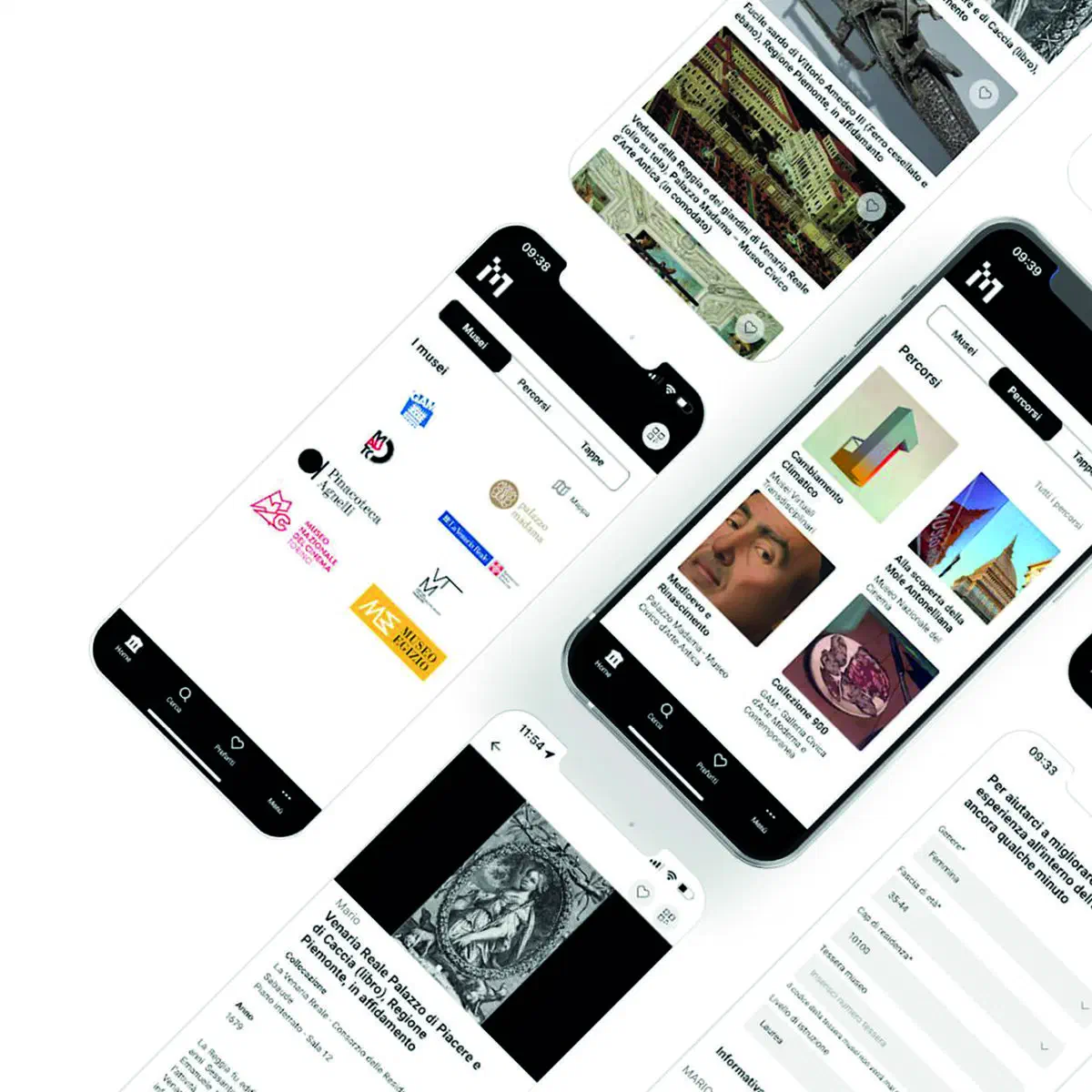
The research will analyse several case studies of integration between physical spaces and digital interfaces, including the Cannero Walking Tales project developed by Dotdotdot for Terre Borromeo and the digital experiences offered by the Egyptian Museum. For the latter, the study will examine the digital audio guide, which is accessible free of charge, even remotely, and the I-MUSE app developed as part of the AI for MUSE project. The study will be complemented by observations of exhibition spaces and museum institutions in various Italian and international cities, to analyse the evolution of traditional museums toward digital and interactive experiences. The case studies will be selected based on the level of integration between physical and digital components, the presence of accessible interactive tools, and their relevance within the contemporary museum landscape.
Data Analysis and Interpretation of Results
The analysis of the case studies will adopt a qualitative-comparative approach to identify effective methods and critical issues in integrating physical space and digital interfaces. The cases will be analysed using criteria related to usability, accessibility, continuity of experience between the physical and digital environments, wayfinding systems for the visitor experience, engagement, and the cognitive load generated by digital interactions. Data collection will be conducted through participant observation, photographic documentation, interface analysis, questionnaires, and semi-structured interviews with visitors.
Bibliography
Bibliography
Bartoli, C. (2025). Phygital transformation: Costruire valore nell’era delle tecnologie ibride. McGraw-Hill Education.
Bonazza, F., & Tibolla, M. (2023). User experience research: Scienza e principi guida per esperienze online efficaci. Flacowski.
Di Dio, S., & Galluzzo, L. (a cura di). (2025). Designing hybrid spaces. Franco Angeli.