Barbara Sorbello
Supervisors
Stefano Zorzanello
Ornella Fazzina
Barbara Sorbello
Supervisors
Stefano Zorzanello
Ornella Fazzina
Artistic Synesthesia and Inclusivity: Transforming Gestures
Trasformare gesti
Research question
How can the integration of ‘artistic synesthesia’ and interactive technologies generate a truly inclusive model of museum engagement for users on the autism spectrum and, more broadly, for those with neurodivergence?
Methodology for achieving the objectives
The aim is to validate design solutions that meet the criteria of being “Novel, Creative, Uncertain, Systematic, Transferable and/or Reproducible” (Frascati Manual, 2015, section 2.7), by examining how the translation of gestures into auditory and visual outputs can transform aesthetic engagement into a multisensory and participatory experience. The study adopts a practice-led, mixed-methods approach. The initial phase, conducted at the Museo Archeologico Regionale ‘Paolo Orsi’ in Syracuse, involved selecting a corpus of works and defining interaction protocols. The current phase, being conducted in Madrid, includes a qualitative empirical study at the Museo Nacional Centro de Arte Reina Sofía and a comparison with other museum institutions. The tools include: participant observation of inclusive visits and workshops, with field notes; interviews with key figures, such as Mónica Rubio of the Subdirección General de Museos Estatales; and SWOT analyses for benchmarking between the Spanish and Italian museum systems.
Case studies
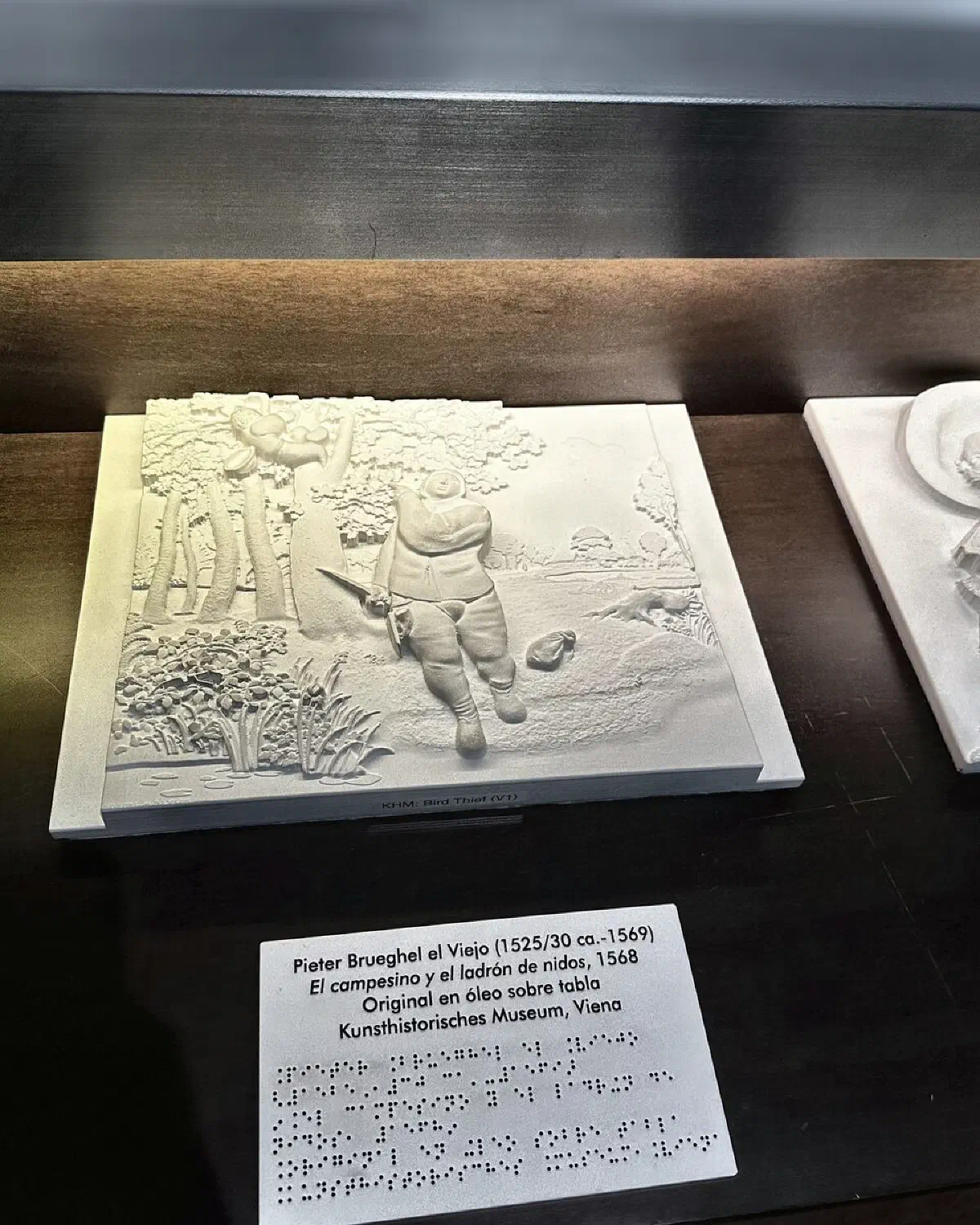
The case studies were selected for their recognised excellence in cognitive accessibility and for the practical applicability of their models to the Italian museum context: the Museo del Prado with Detalles que crean historias, which uses narrative through detail to reduce cognitive anxiety in students with autism spectrum disorders; the Museo del Traje, with its experimentation with tactile languages and embodied cognition as a bridge to neurodivergent inclusion; the Museo Lázaro Galdiano with the Laboratorio de los Sentidos (developed since 2025 with Fundación ONCE), which integrates interactive technologies and haptic aids to promote visitor autonomy; the Asociación Argadini with the Hablando con el Arte project, which promotes emotional education by emphasising the centrality of the individual beyond compensatory adaptation.
Data analysis and interpretation of results
The analysis highlights that cognitive accessibility in Spanish state museums is underpinned by robust central coordination, capable of promoting shared standards of universal design whilst ensuring institutional autonomy. The multisensory approach and ‘technology as an emotional mediator’ encourage the active construction of meaning, reducing performance anxiety among neurodivergent visitors. In line with the Palette of Emotions, ‘digital synesthesia’ emerges as an innovative and non-stigmatising practice that broadens the aesthetic experience in accordance with the principles of Design for All. The results offer tools that prove replicable for the Italian museum system, with direct implications for the Sicilian context, transforming the artistic gesture into a universal language and the museum into a space for active and shared participation.
Bibliography
Bibliography
Banzi, A., Gaggioli, A., & Pizzolante, M. (2025). La mente al museo: Come innovare i percorsi museali con la psicologia e le neuroscienze. Vita e Pensiero.
Drioli, A. (2025). Museo più: Il nuovo ruolo sociale dei musei del XXI secolo. Liguori Editore.
Hervás, R. M. (2020). IV Encuentro de Museos de España. Museos y Educación: Estrategias de Innovación. ICOM España.
Jalla, D. (2025). Il museo accogliente: Manuale di pratica museale. Scuola nazionale del patrimonio e delle attività culturali.
Mastrogiuseppe, M., Span, S., & Bortolotti, E. (2021). Improving accessibility to cultural heritage for people with intellectual disabilities: A tool for observing the obstacles and facilitators for the access to knowledge. ALTER, European Journal of Disability Research, 15, 113–123.