Chiara D'Orazio
Supervisor
Daniela Lotta
Chiara D'Orazio
Supervisor
Daniela Lotta
The Designer's Role in the Romagna Riviera, Between Constructing the Imaginary of Entertainment and Social Responsibility
Tra costruzione dell’immaginario del divertimento e responsabilità sociale
Research Question
In an increasingly fragmented communication landscape, the question remains open: “Should we merely regret a past that will never return, or should we commit ourselves to bringing order to the chaos?” (Munari, 2017, p. 53). This research begins from the latter premise, by undertaking an archival, historical, and sociological investigation of the visual languages of the Romagna Riviera between the 1980s and the early 2000s – a period in which communication was split between expressing desire and educational responsibility. The project compares leisure-oriented graphic design, driven by business and commercial logics, with public interest graphic design, which emerged as a critical response to the hedonistic excesses of those decades. Can the archival reconstruction of this graphic heritage today foster new narratives and contemporary perspectives?
Methodology
This project adopts a Research through Design approach, using design as an interpretative lens. A mixed-methods methodology combines qualitative and quantitative tools to examine both the evolution of public interest graphic design and the transformation of a territory shaped by cultural change, the rise of dance music, and the emergence of nightclubs as spaces of social aggregation. The qualitative phase will involve the cataloguing of archival sources and interviews with key actors of the period – including designers, youth collectives, and DJs – in order to reconstruct the socio-cultural context, visual languages, and design processes of the time. A historical-artistic analysis, integrated with sociological frameworks and data provided by local institutions, will enable the scientific validation of the findings. The selection and indexing of sources will lead to the creation of a historical-artistic archive aimed at preserving collective memory and supporting future research.
Case Studies
The mapping of designers active in Milano Marittima, Rimini, Riccione, and Cattolica – with a possible extension to the Ravenna seaside resorts of the so-called “Joyful Coast” (Battilani, 2015) – will enable an exploration of the visual languages of leisure culture manifested in awareness campaigns for social responsibility. The research focuses on often self-taught practitioners who handcrafted and self-produced graphic works using cut-and-paste techniques. Artistic collectives such as Complotto Grafico and the cultural milieu surrounding Slego, together with designers working for nightclubs such as Indie Club in Pinarella, Cocoricò, and Baia degli Angeli, represent the first steps towards mapping a broader network of collaborations.
Data Analysis and Interpretation of Results
The analysis will begin with the Complotto Grafico Archive, digitised and preserved at the Research Centre of Cattolica. More detail on how the findings can be interpreted to answer the research question will be disseminated through an online platform hosting a dynamic digital archive. The Tainacan Interface plug-in, adapted from the FrameLab project and currently employed for the metadata management of the Public Interest Graphic Design Archive of Cattolica, will provide both the technical infrastructure and the interpretative framework for the project.
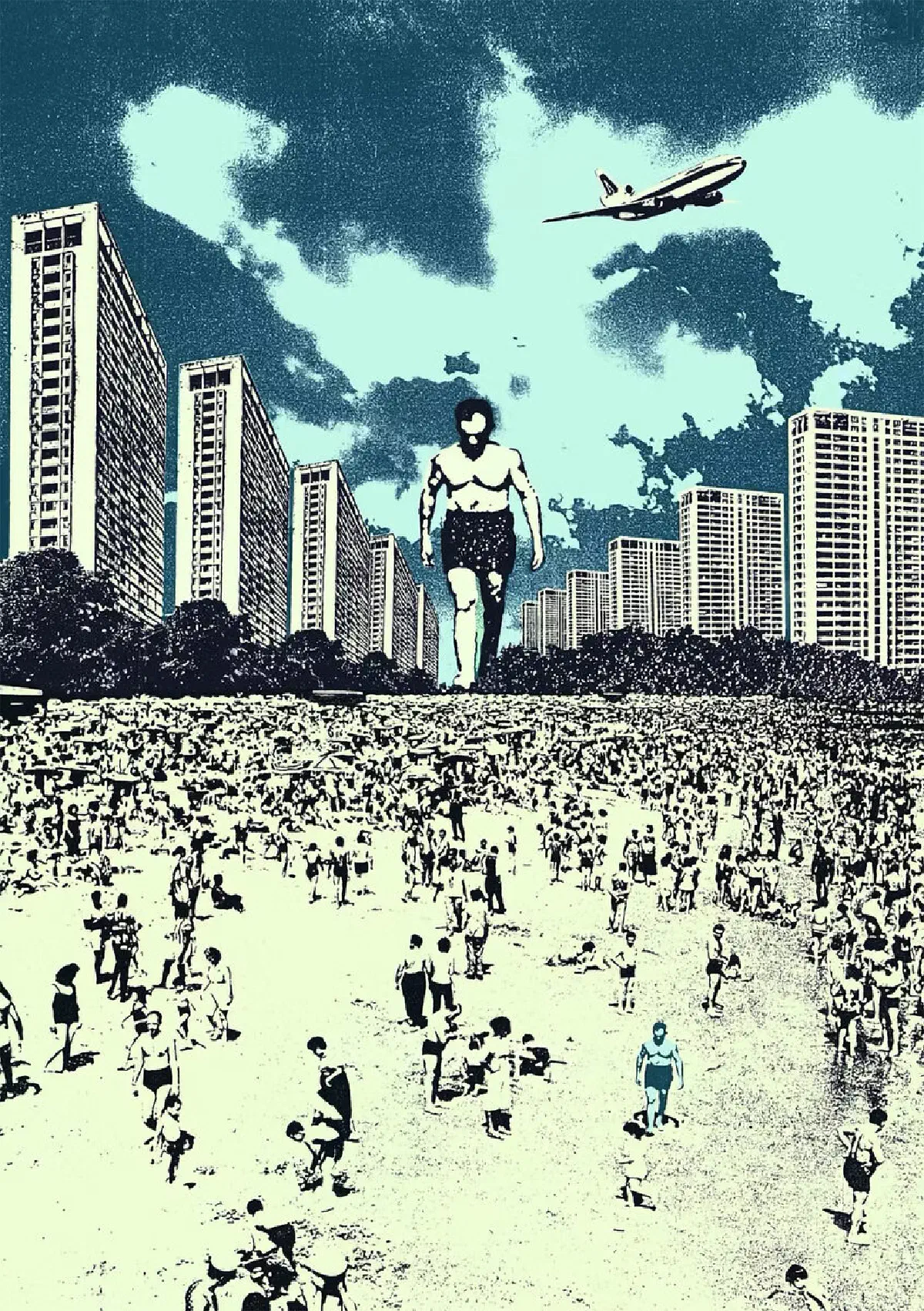
Image and Caption Complotto Grafico (Giovanni Tommaso Garattoni, Massimiliano Sirotti) Rimini – The Big Bath 1985 Printed poster on paper 100 × 79 cm Cattolica, Centro Polivalente di Ricerca “Like a seaside Los Angeles, Rimini embodies the capital of Italian leisure culture: a vibrant ecosystem of tourist and sonic flows.”
Bibliography
Bibliography
AA.VV. (2018). #34 - Divertimento. Progetto Grafico, AIAP Edizioni.
Battilani, P., & Mariotti, A. (2021). Progetto Identità Spiaggia. Studio di fattibilità per la candidatura degli usi sociali della spiaggia di Riccione come Patrimonio Immateriale riconosciuto dall’UNESCO. AlmaDL.
Eisenbrand, J., Kries, M., & Rossi, C. (2018). Night Fever: Designing Club Culture 1960-Today. Vitra Design Museum.
Serafini, M. (2018). Rimini underground - Le avanguardie grafiche anni ’80. Guaraldi Editore.
Tedesco, R. (2020). Italo Disco - Storia della dance in Italia dal 1975/88. Edizioni EBS Print.