Andrea Giovanni Cali
Supervisors
Vittorio Ugo Vicari
Paola Mariani
Andrea Giovanni Cali
Supervisors
Vittorio Ugo Vicari
Paola Mariani
Innovative Strategies for Cataloguing and Making the Theatrical Heritage Accessible
Research question
The research investigates how advanced technologies (AI, AR/VR, photogrammetry, 3D scanners) can make the Rossini Opera Festival’s theatrical heritage sustainable, preservable and accessible. Central question: How can AI, AR/VR, and digitalisation techniques improve the conservation, cataloguing and enjoyment of the ROF’s theatrical heritage?
Methodology to achieve the objectives
The methodology adopted is mixed, combining qualitative, quantitative and practice- based tools. Scanners, photogrammetry, digital imaging and AI models were used for metadata extraction. The use of AR/VR is envisaged to provide an immersive experience of digitised heritage. The entire process has been structured into progressive, interdependent phases, designed to ensure scientific rigour and replicability of the model. Summary timeline Year 1: bibliographic update (a.b.); preliminary development of the archiving system; collection and digitalisation of ROF materials. Year 2: (a.b.); development of an advanced search system; system testing and conservation monitoring. Year 3: (a.b.); system evaluation; identification of improvements; thesis drafting.
Case studies
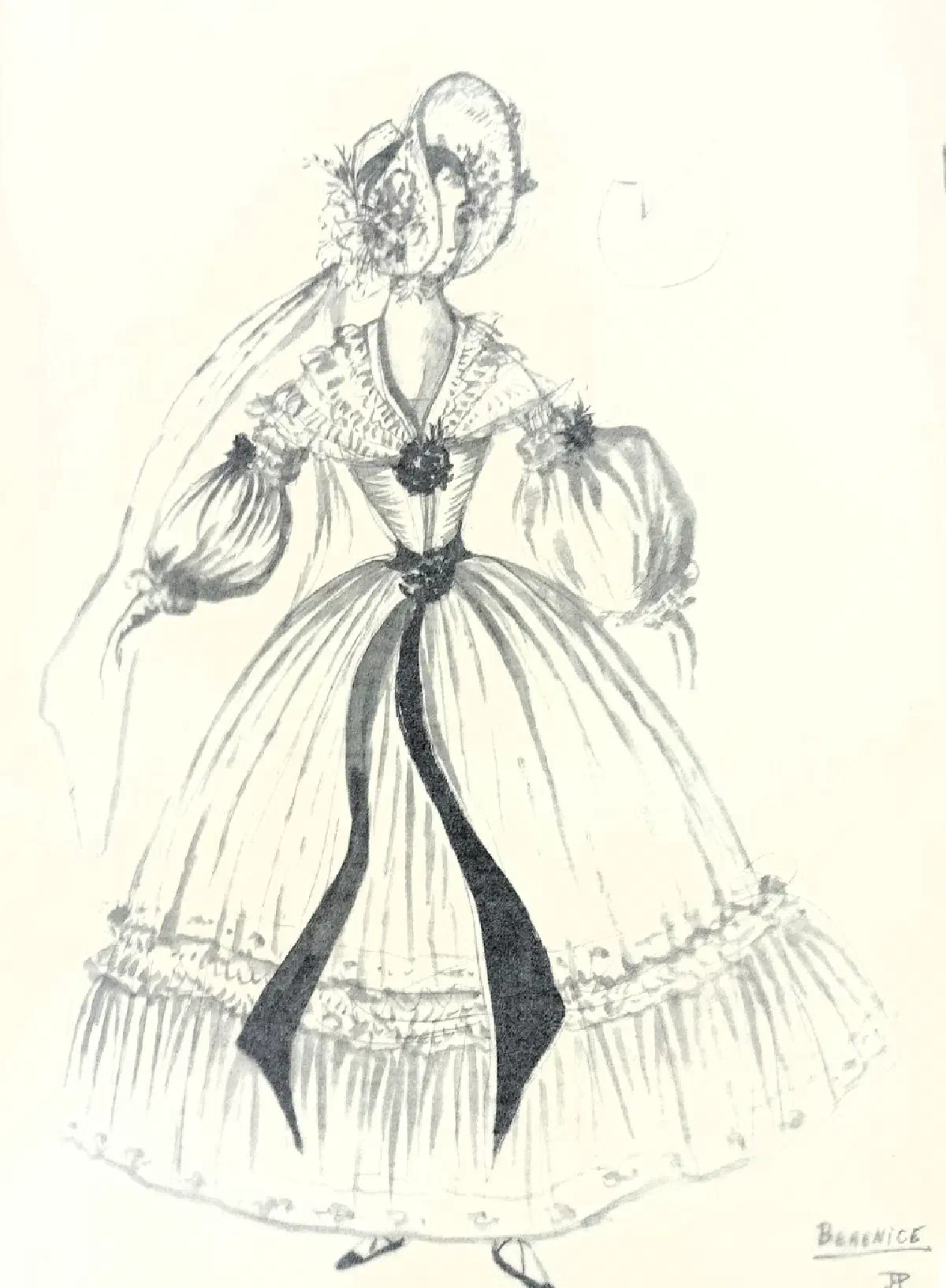
The research initially involved analysing the ROF’s oldest productions, commencing with Il turco in Italia (1983), to test the digitalisation and cataloguing workflow. This study led to the creation of catalogue records starting with the costume designers who have collaborated most closely with the ROF. The record is based on the model developed by Paola Bignami, for the Teatro Comunale di Bologna, published in the volume ‘Storia del costume teatrale’, Carocci, Rome, 2005.
Data analysis and interpretation of results
The data analysis combines quantitative and qualitative approaches to assess the effectiveness of the digitisation and cataloguing system. The measurement of the types, quantities, and state of preservation of the materials was accompanied by verification of the metadata’s accuracy, which was compared with controlled records and vocabularies to ensure consistency. A critical review of the documentation revealed that digitalisation requires informed choices in defining standards. The future sustainability of the archive, understood as the ability to maintain accessibility and operational continuity, will be based on the use of open formats, the standardisation of metadata according to Dublin Core, and the documentation of processes – elements necessary to ensure stability and interoperability. The assessment of the risk of technological obsolescence involved the use of preservation strategies based on periodic migration, the adoption of interoperable standards and the monitoring of software and hardware dependencies, to ensure the archive’s continued usability over time. The results indicate a significant improvement in the digitalisation, accessibility and traceability of the theatre heritage, outlining a sustainable and replicable model for other archives in the sector. Ciandrini, P. (2023). Umanesimo digitale: Percorsi e contaminazioni disciplinari. Editrice Bibliografica. Guerrini, M., Tillett, B. B., Lor, P. J., Bergamin, G., Manzoni, L., & Biagiotti, D. (2022). Dalla catalogazione alla metadatazione: Tracce di un percorso (2ª ed.). Associazione Italiana Biblioteche. Tompkins, J. E. (2022). Visualising lost theatres: Virtual praxis and the recovery of performance spaces. Cambridge University Press.
Bibliography
Bibliography
Ciandrini, P. (2023). Umanesimo digitale: Percorsi e contaminazioni disciplinari. Editrice Bibliografica.
Guerrini, M., Tillett, B. B., Lor, P. J., Bergamin, G., Manzoni, L., & Biagiotti, D. (2022). Dalla catalogazione alla metadatazione: Tracce di un percorso (2ª ed.). Associazione Italiana Biblioteche.
Jaillant, L. (2022). Archives, access and artificial intelligence: Working with born-digital and digitized archival collections. Bielefeld University Press. https://doi.org/10.1515/9783839455845
Nida-Rümelin, J., & Weidenfeld, N. (2022). Digital humanism: For a humane transformation of democracy, economy and culture in the digital age. Springer Nature.
Tompkins, J. E. (2022). Visualising lost theatres: Virtual praxis and the recovery of performance spaces. Cambridge University Press.